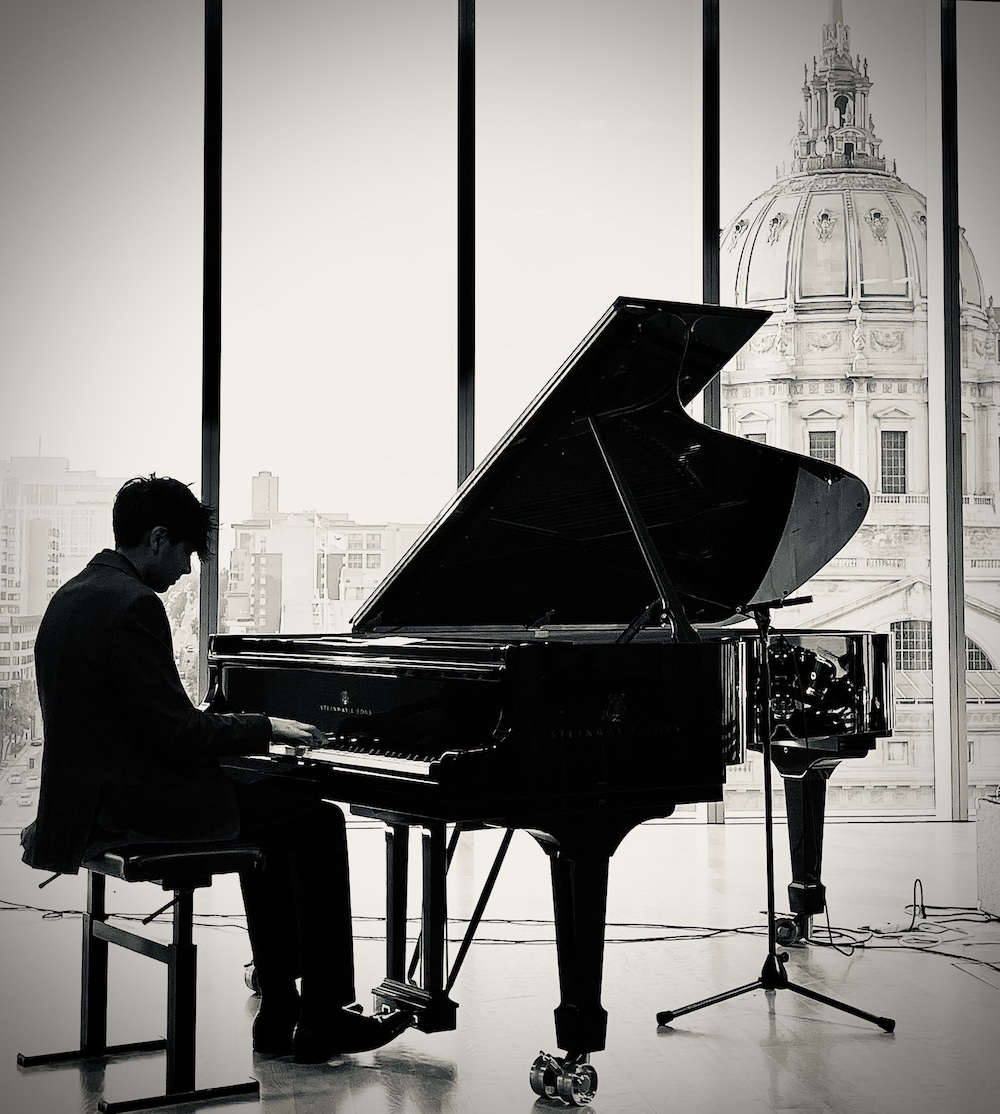
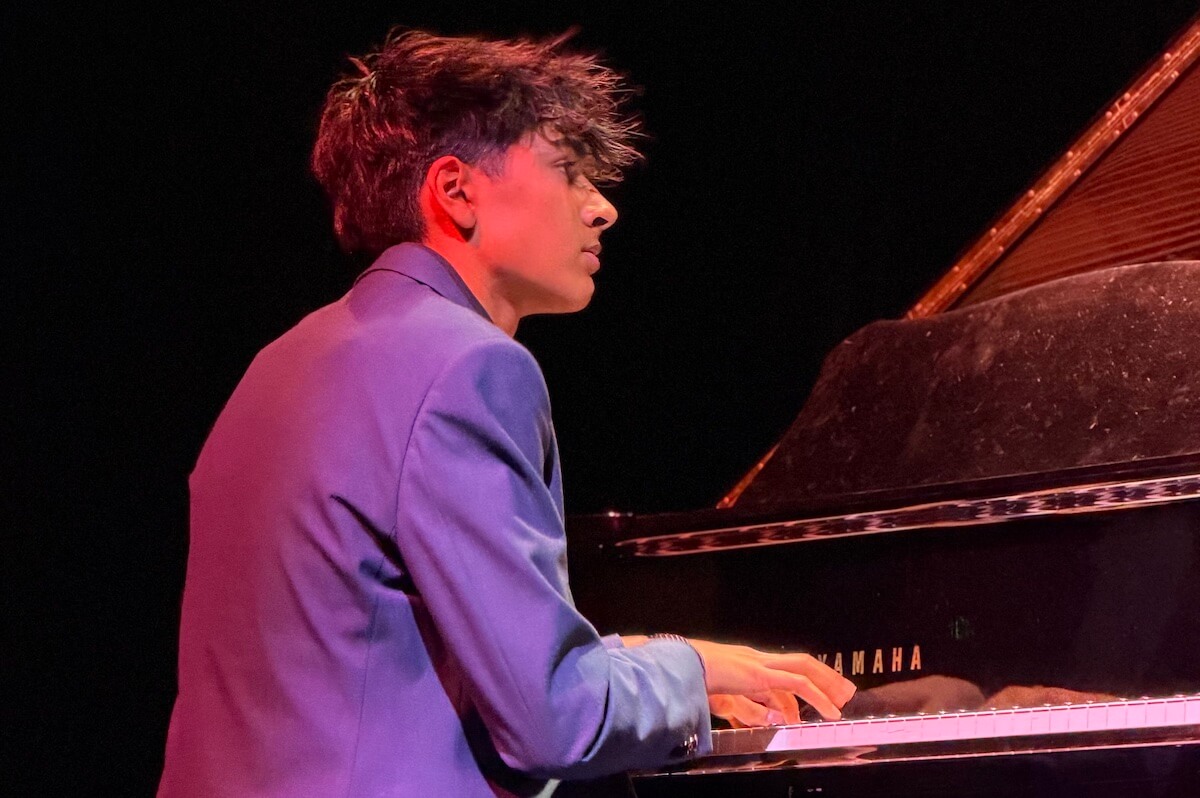
Congratulations to Armaan Mishra, who has received the Maude’s Ventures 2025 Young Founders Program Award. In collaboration with Dr. Julene Johnson of the UCSF Institute for Health & Aging, Armaan is developing a framework and practical tools (guidelines, templates, videos, curriculum) to improve musical interactions between student musicians and residents with dementia. We recently discussed his experience playing for nursing home residents and his plans for helping other teen musicians do the same.
Dan Cohen: What first inspired you to play in an eldercare setting?
Armaan Mishra: About ten years into my musical life, I began asking myself: how can I harness music for the good of the community? As I played more in the community, I began witnessing firsthand how music can heal and connect. Eventually, I started collaborating with other jazz friends to bring music into places with elderly populations, where I realized that music had a uniquely profound way to connect and bring joy to this community.
DC: What was your first gig?
AM: It was about two years ago—a Christmas party at a senior home in San Mateo. A group of us high school jazz musicians played a set of Charlie Brown jazz and other holiday classics. It was a very good time—especially with the cookies and milk!
DC: What was the response of the folks that were there?
AM: It was certainly positive. However, as I started to do more gigs, I realized there was very little active engagement between the performers and audience members. It was pretty segmented: you’d go on, perform, and then you’d leave. . . . There wasn’t really interaction between the residents and the musicians, which felt like a missed opportunity. I realized that there’s so much more that is possible. If we could be more intentional about the experience, we could make it more meaningful—for both parties.
DC: Are there any reactions to your music that stand out in your mind?
AM: Once I was playing a solo piano gig, and I finished the set with the song “Pure Imagination,” one of my favorites. After the performance was done, a woman with early stage dementia came up to me and said something that I would never forget. She said, “My son used to play piano, and he died . . . and I hadn’t felt this way about the keys until today when you played. You remind me of my son.”
While I was at a loss for words, I knew we shared a beautiful moment together. As I reflected on the car ride home, her words changed my life. They reminded me why I go to these spaces, why I play music, and the power of music to invoke memory and create incredibly emotional experiences.
DC: It’s hard, but it sounds like it was therapeutic. That song put her in touch with her grief in a different way.
Expanding Intergenerational Music Outreach
DC: Let’s pivot to talk about your planned approach on how to help other young adults provide music that generates a more meaningful musical experience.
AM: The goal is to create a student guidebook of best practices. We want to maximize the experience for people living with dementia, as well as for the musicians. I see this in numerous ways:
First, providing insight into crafting a set-list tailored to the needs of the audience, based on listener input, demographics, and other considerations.
Second, setting expectations for musicians and giving guidance for live engagement. What should musicians expect as they enter these spaces? How should they plan to improvise? How does one center the experience around connection rather than performance for a more mutually meaningful experience?
And third, ensuring cultural and identity sensitivity—crafting the musical experience based on the audience’s stage of dementia. So, there are numerous considerations to center the session around connection and the needs of people living with dementia.
The output of this project will be a digestible and implementable set of tools. Musicians can grab a set-list or can get inspired to make their own. There will be templates and instructional videos on how to engage at the venue. It will include synthesized background information on dementia. Just easily accessible practices so student musicians can go into these spaces feeling better prepared.
DC: Would guidance vary by setting? For instance, different guidance for hospitals versus nursing homes?
AM: Certainly. Guidance would be dependent on the venue, informing how you craft the set-list and how you engage.
DC: What do you see as the key benefits and challenges for young people as they make their way into these settings?
AM: To me, the benefits seem remarkable and attainable. It will take a bit of work for the musicians to read and implement the guidelines, and inevitably you’re going to be playing music that you might be less comfortable with or you’re going to have to spend time learning the new material. But I hope musicians will understand that a little bit of extra effort could yield a substantially more fulfilling experience. And I really want these practices to be available to as many people as possible.
One of my hopes for this guidebook is that it’s a living document. As people implement it, test various approaches, and get feedback from the residents and the facilitators, I’m hoping to create a space where we can receive feedback and iterate, such that the guidebook continually evolves.
DC: So it’s sort of a Wikipedia kind of community-based effort. Very cool. So for readers of this blog post who are no longer young adults, is there any one step they could do to get more young people involved?
AM: I think for one, continuing outreach. Broadening access is something I think that everybody can contribute to. For instance, adults can be in touch with local high school music programs and nursing homes to share some of these resources. Also, while these guidelines are centered around student musicians, I don’t think they must exclusively be applied by students, because a lot of the information and guidance is broad. There will certainly be sections that are tailored for teenagers, but if there are older musicians that also are entering these spaces, I think the guidelines could certainly be applicable to some extent.
Spreading the Word and Measuring Success
DC: Julene, once Armaan has completed these best practice resources for young adults, how do you envision disseminating the information to a national and international audience?
Dr. Julene Johnson: There are so many different stakeholder groups that would be interested. Obviously, we’re going to lean on Armaan to think about the high school stakeholders, whether it’s education systems or social media, all these dimensions of where people gather and talk about ideas. Then you have national organizations, such as the Alzheimer’s Association, or Us Against Dementia, or the Brain Health Action Coalition, which has been very good at helping push out some resources and messages.
Then I think there’s the community level, whether it be faith-based organizations or clubs, social events that happen locally. It would be interesting to come up with a dissemination strategy that hits both community-based, local, national organizations, and then obviously, young people, to hear, how they want to find out about this.
Then because the Brain Health Action Coalition is trying to promote intergenerational conversations about music and dementia, it would be natural to use this as an example that we could facilitate that discussion. There are so many resources, but strategically, that would be something hopefully Armaan will think about when finishing the project. Of course, we can share this internationally, music groups also, and get it on key websites and things.
DC: How do we measure success? We have many wonderful anecdotes. That’s what drives each of us, right? For me, it’s when somebody lights up. And so, how should we measure the impact and success of our music performances?
JJ: You can start as simple as how many downloads does the document get. We currently don’t have a central resource for tracking these events. Although Teresa Allison has done queries that offer a general baseline of how many music programs are in the US. By drilling down a little bit, you may be able to discern how many are delivered by highschoolers, and if so, that could be your baseline.
Then if you can describe that in a way that is relatively objective, because we have a library scientist find all of these opportunities for music. Then you do it a year or six months after you’ve released this you can track just general awareness, meaning there’s more music programs, which will be harder to conclude that it’s because of your guidelines. But I would think you can zero in on some metrics related to highschoolers.
Also, maybe the National Association for Music Education can help you track it because all these high schools must be accredited, right? The music teachers in the high schools. Maybe they track the metrics on the high school level and agree to doing that once a year or something. I think it’s worth thinking about how can we measure success and what does success look like.
AM: That’s a great question, and measuring success is something we will continue to explore within our team and by engaging with the community. We hope to support meaningful progress in dementia care within an already extraordinary community.